

Every year it happens the same way. We go weeks without a drop of rain, everybody forgets what a wet winter feels like, and then one storm rolls through and suddenly there's water in the road, mud coming off a hillside in Fallbrook, and a line of cars at the fire station at nine o'clock at night.
This year, forecasters are watching a potentially significant El Niño pattern — which could mean a wetter-than-usual winter across Southern California. Nobody can tell you exactly what's coming or when. But I can tell you the County is preparing, and I'd like you to prepare too.
Here's what we're doing, and what I'm asking of you.
Free sandbags at fire stations
Ahead of significant storms, the County makes free sandbags available at fire stations throughout the county. No cost, no paperwork. At most locations you fill them yourself, so bring a shovel — and if you can, bring a neighbor. It goes a lot faster with two people.
One important detail people get wrong: those sandbags go out when a major storm is on the way. They aren't stocked at every station year-round. So when you see the forecast turn, that's your cue. Check the County website for the stations nearest you and go early in the day, before the rain starts and the line gets long.
If you want to get ahead of it, keep a stack of empty sandbags in the garage. They cost a few dollars at any hardware store, they last for years, and then the only thing you're doing on storm day is filling them.
And placement matters more than volume. Ten or fifteen bags laid correctly — across a low doorway, along a driveway that funnels water toward the house, at the low corner of a garage — will do more than fifty bags stacked in the wrong spot.
What County crews are already doing
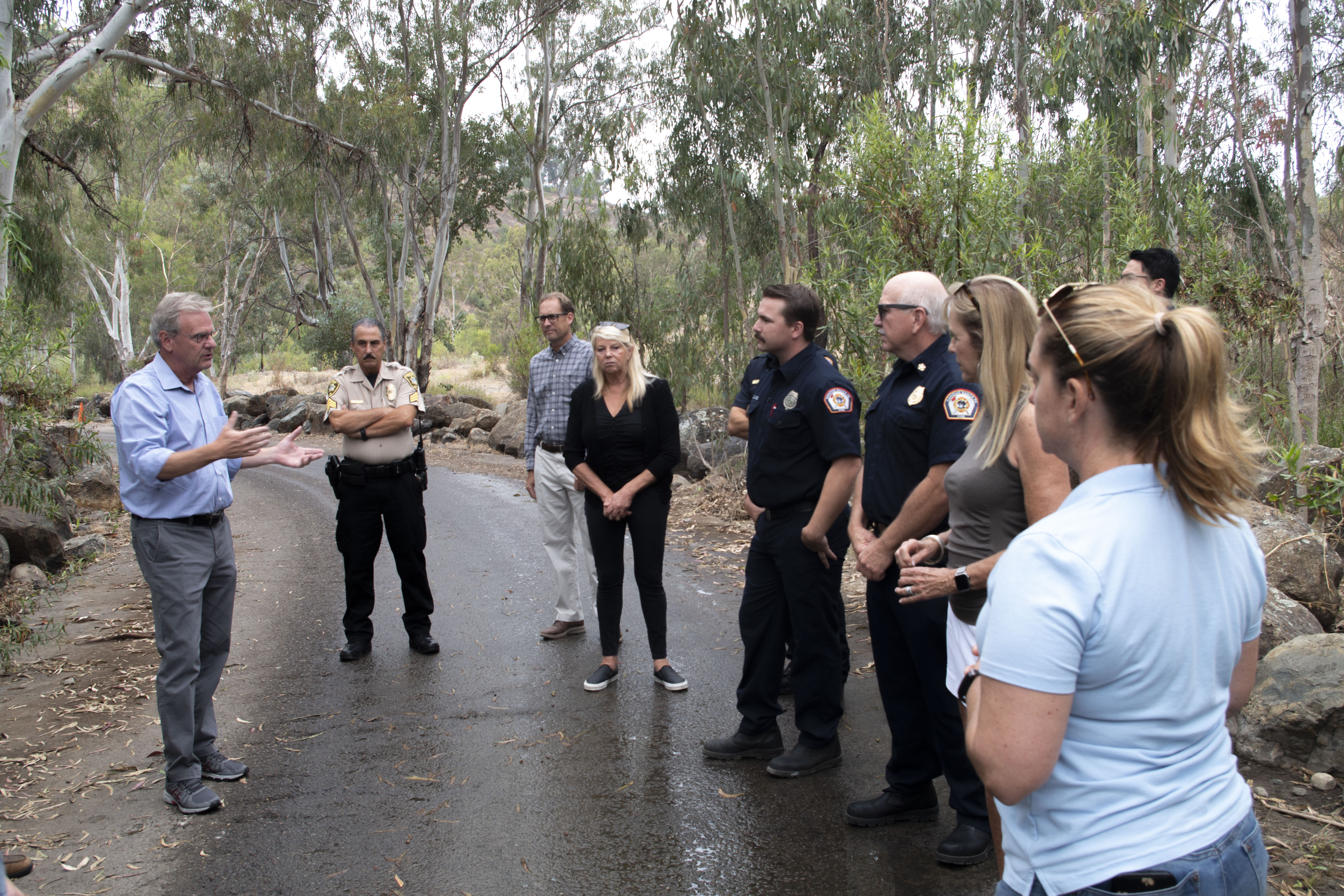
Long before the first cloud shows up, our Public Works crews are out doing the unglamorous work that keeps water moving where it's supposed to go. Clearing storm drains. Cleaning out culverts. Pulling debris and overgrowth out of drainage channels from Fallbrook to Ramona to Valley Center to Borrego Springs.
When a storm hits, those crews shift to round-the-clock storm patrol — ready to clear a blocked drain, put out barricades, or close a flooded road at two in the morning. It's not the kind of work that makes headlines, but it's exactly what your tax dollars are supposed to be doing.
Three things I'm asking you to do
1. Sign up for emergency alerts. Register your cell phone at AlertSanDiego.org and download the free SD Emergency app. This is the big one. If we need to tell you a road is out or that it's time to leave, that's how we reach you. It takes about two minutes and it costs nothing. Landlines are already in the system — cell phones and VoIP numbers are not unless you register them.
2. Turn around, don't drown. When you see water running over a road, do not drive through it. I mean that. A few inches of moving water is enough to carry a vehicle away, and you have no idea whether the roadbed underneath is still there. Every winter somebody in this county learns that the hard way. Check 511sd.com before you head out, and if a road is barricaded, it's barricaded for a reason.
3. Spend an hour on your own property. Clear your rain gutters and downspouts. Walk your lot and watch where water goes when it comes off the roof — the answer is often surprising. Trim back branches that will come down in a hard wind. Make sure your yard drains aren't packed with leaves.
A few things worth knowing
If you live below a recent burn scar, pay extra attention. Burned ground doesn't absorb water — it sheds it, fast, and it carries mud, rock and debris with it. A hillside that handled rain fine for twenty years can behave completely differently the first winter after a fire.
Flood insurance usually takes 30 days to take effect. Standard homeowners policies don't cover flood damage. If you're thinking about a policy, thinking about it in January is too late.
Dial 2-1-1 for non-emergency help. Sandbag locations, shelter information, road conditions — 2-1-1 is staffed around the clock. Save 9-1-1 for actual emergencies.
Check on your neighbors, especially the older ones and anyone living alone. In my experience that single habit does more good in a storm than any government program.
We'll do our part
I've lived in North County a long time. I know that the difference between a wet weekend and real damage usually comes down to a handful of small decisions made before the rain starts — not during it.
The County will be ready. Our crews will be out there. The sandbags will be available when the storms come. Take an hour this weekend and make sure you're ready on your end.
And as always, my office is here to help. If you have a question, a concern about drainage in your neighborhood, or a problem you can't get anyone to answer, reach out:
Email: [email protected] Phone: (619) 531-5555
Thanks for reading, and stay safe out there.